
Every wild bird in the UK is protected by law. That single fact decides what you are allowed to do about pigeons on a warehouse roof, gulls on a seafront hotel, or jackdaws in a chimney, and it is the reason proofing and deterrence are the routine answer rather than the last resort.
This page sets out the legal position as it stands for England in 2026, what it means for each of the species we supply products against, and where the line falls between what anyone may do and what needs a licence. Last reviewed 7 September 2026.
The starting point: all wild birds are protected
Under the Wildlife and Countryside Act 1981, it is an offence to intentionally kill, injure or take any wild bird. It is also an offence to intentionally take, damage or destroy the nest of any wild bird while that nest is in use or being built, or to take or destroy its eggs.
There is no species that sits outside this by default. Feral pigeons are protected. Gulls are protected. Starlings and house sparrows are protected, and both are on the red list of birds of conservation concern. The protection is the rule, and the licences below are the narrow exception to it.
The general licences, and what they actually permit
Natural England issues a small number of general licences each year. They allow an authorised person to take action against a named list of species, for a named purpose, without applying for anything individually. They run for a calendar year and the terms and the species lists change between years, so a licence you relied on last season may not say the same thing this one.
For 2026 the three that matter are:
- GL40 – to conserve endangered wild birds, or flora and fauna of conservation concern.
- GL41 – to preserve public health or public safety. This is the one most often relevant to a building.
- GL42 – to prevent serious damage to livestock, feed, crops, fruit, fisheries or inland waters.
All three run from 1 January 2026 to 31 December 2026. You do not register to use one, but you do have to meet its conditions, and the burden of showing you met them sits with you.
GL41 covers four species, and that is all
The public health and safety licence names Canada goose, feral pigeon, jackdaw and monk parakeet. Nothing else. If the bird causing the problem is not one of those four, GL41 does not help you.
An “authorised person” is defined in section 27(1) of the 1981 Act. In practice it is the owner or occupier of the land, or somebody they have authorised. It is not a qualification you hold, it is a relationship to the site.
There is also a condition attached to jackdaws specifically: reasonable endeavours must have been made to achieve the same result by other lawful means first, unless doing so would be impractical, ineffective or disproportionate. That is the law explicitly pointing at proofing before anything else.
Gulls are the case everybody gets wrong
Herring gull and lesser black-backed gull have been removed from the general licences because their conservation status has worsened. Herring gull is red-listed. There is no general licence you can rely on to kill or take a gull, or to remove a gull nest in use, and that includes a nest on your own roof.
Acting outside a licence means applying to Natural England for an individual one, and those are assessed case by case against evidence that non-lethal measures have been tried.
Which is why, for gulls, physical exclusion is not the cautious option. It is the only routine lawful option. Gull work is proofing work: spikes sized for a gull rather than a pigeon, netting, post and wire on ridges and parapets, and scaring where the site allows it.
Nesting: the season is the constraint
The offence attaches to a nest that is in use or being built. That is what makes timing the single most important part of planning any bird work. Once a nest is active, the lawful options narrow sharply and usually reduce to waiting.
Nesting seasons at a glance
| Species | Nesting period | What it means for timing |
|---|---|---|
| Jackdaw and chimney nesters | February to May | Do chimney work in autumn or early winter, before they start. |
| Gulls | April to August, eggs from around May | Roof proofing should be finished well before spring. |
| Starling and house sparrow | March to August | Both are red-listed. Never close a cavity already in use. |
| Feral pigeon | Any month, given shelter and food | Judged on the individual site rather than the calendar. |
The practical consequence: proof outside the nesting season, and proof before there is a problem rather than after. A survey in September is worth more than an emergency in May.
What needs no licence at all
Preventing a bird from landing, roosting or nesting in the first place is not a licensable activity. Exclusion and deterrence sit outside the licensing regime entirely, provided the method does not injure the bird and does not trap it or seal it into a space it cannot leave.
That covers essentially everything we supply:
- Spikes, which deny a ledge without harming anything that lands on it.
- Netting, which excludes a whole volume such as a courtyard, light well or loading bay.
- Post and wire, for ridges and parapets where the look matters.
- Repellent gels, for ledges where a fixing is not appropriate.
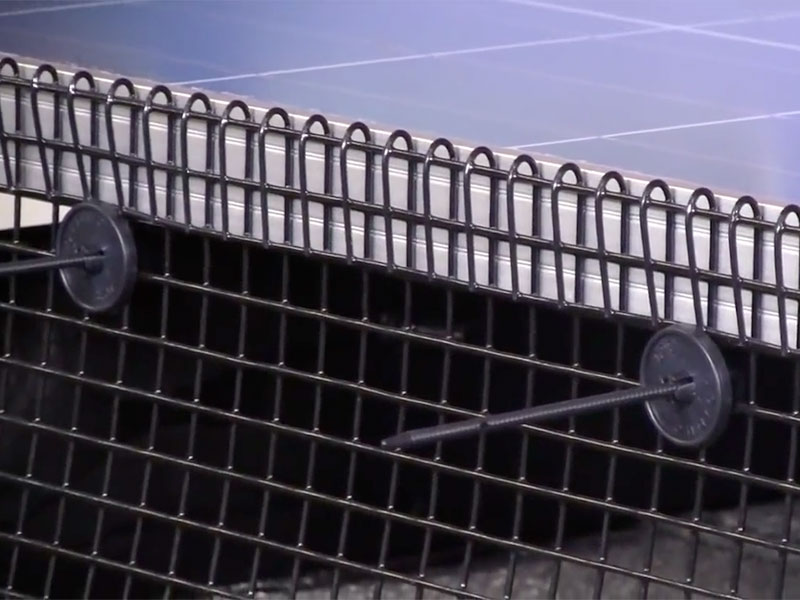
- Solar panel exclusion, which closes the gap under an array without piercing the panel or its frame.
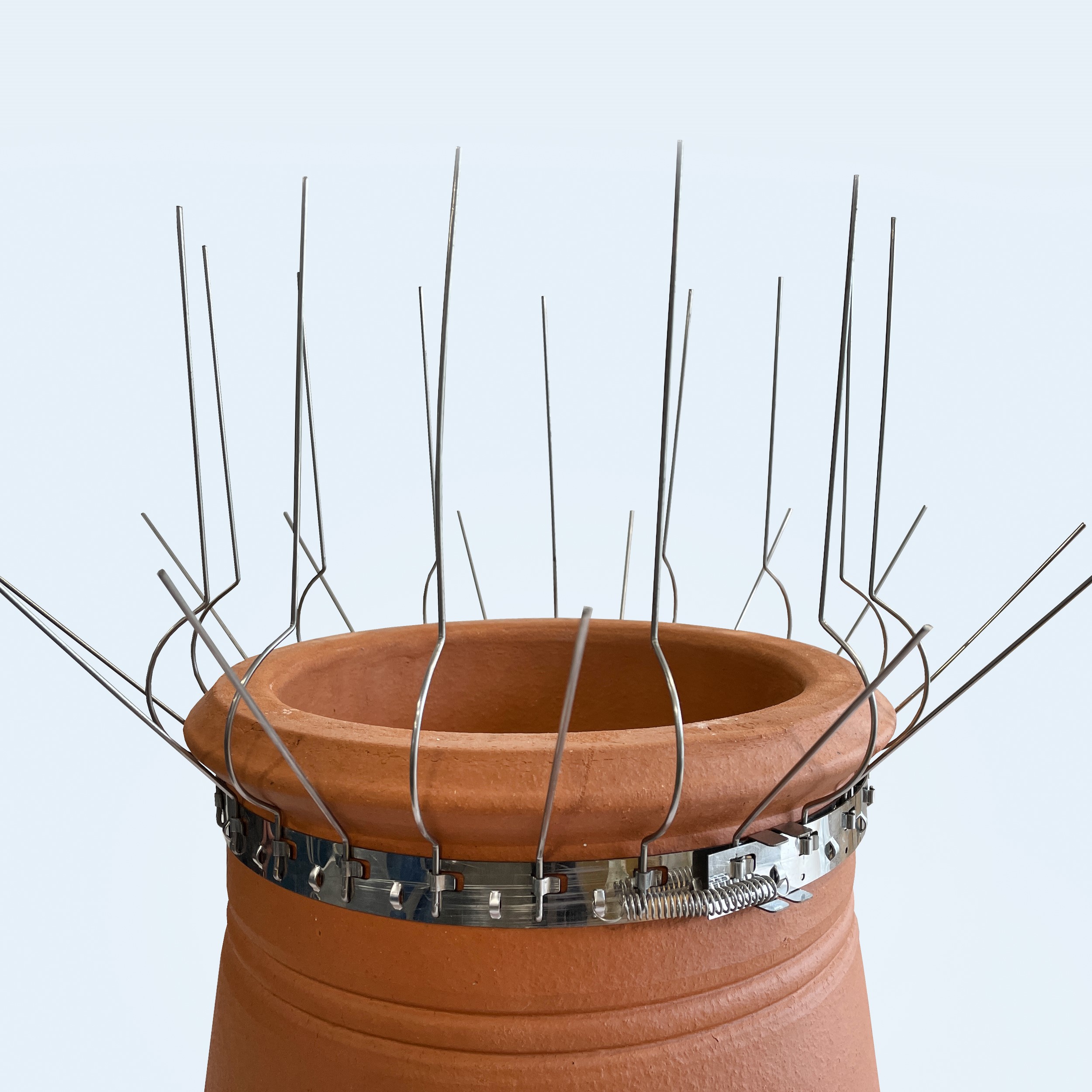
- Chimney protection, fitted outside the nesting season.
- Scarers, visual, sonic and laser, where the setting suits them.
Two things do still need care. A net or a cavity block must not trap a bird inside, which is why netting is inspected and maintained rather than fitted and forgotten. And a nest that is already in use is protected whatever method you were planning, so the survey comes first.
Scotland and Wales are not the same
General licences in Scotland are issued by NatureScot and in Wales by Natural Resources Wales. The species lists and the conditions differ from England’s, and they are revised on their own timetable. Do not carry an English licence across a border in your head.
Before you rely on any of this
This page is a plain-English summary written by a supplier, current at the review date above. It is not legal advice, and the licences it describes are reissued and amended every year. Read the licence itself on GOV.UK before you act on it, and if the situation involves an active nest, a protected site, or a species not named on a general licence, take proper advice first.
If you need the work carried out rather than the parts supplied, EnviroGuard is a supplier and does not install. Bird control installation across the group is handled by JG Pest Control.